

Solar Backpack vs Power Bank for Outdoor Use
Release time: 2026-11-16
Table of Contents
When preparing for a camping trip, hiking route, or weekend bushwalking adventure, keeping a smartphone charged can be an important part of outdoor planning. Two products often considered for portable charging are solar backpacks and conventional power banks. Although both can help users access electricity away from wall outlets, they work in different ways.
A solar backpack generates electricity from sunlight, while a power bank stores electricity that has already been charged into its internal battery. They are not direct replacements for each other, and the more suitable option depends on trip duration, sunlight availability, and device requirements.
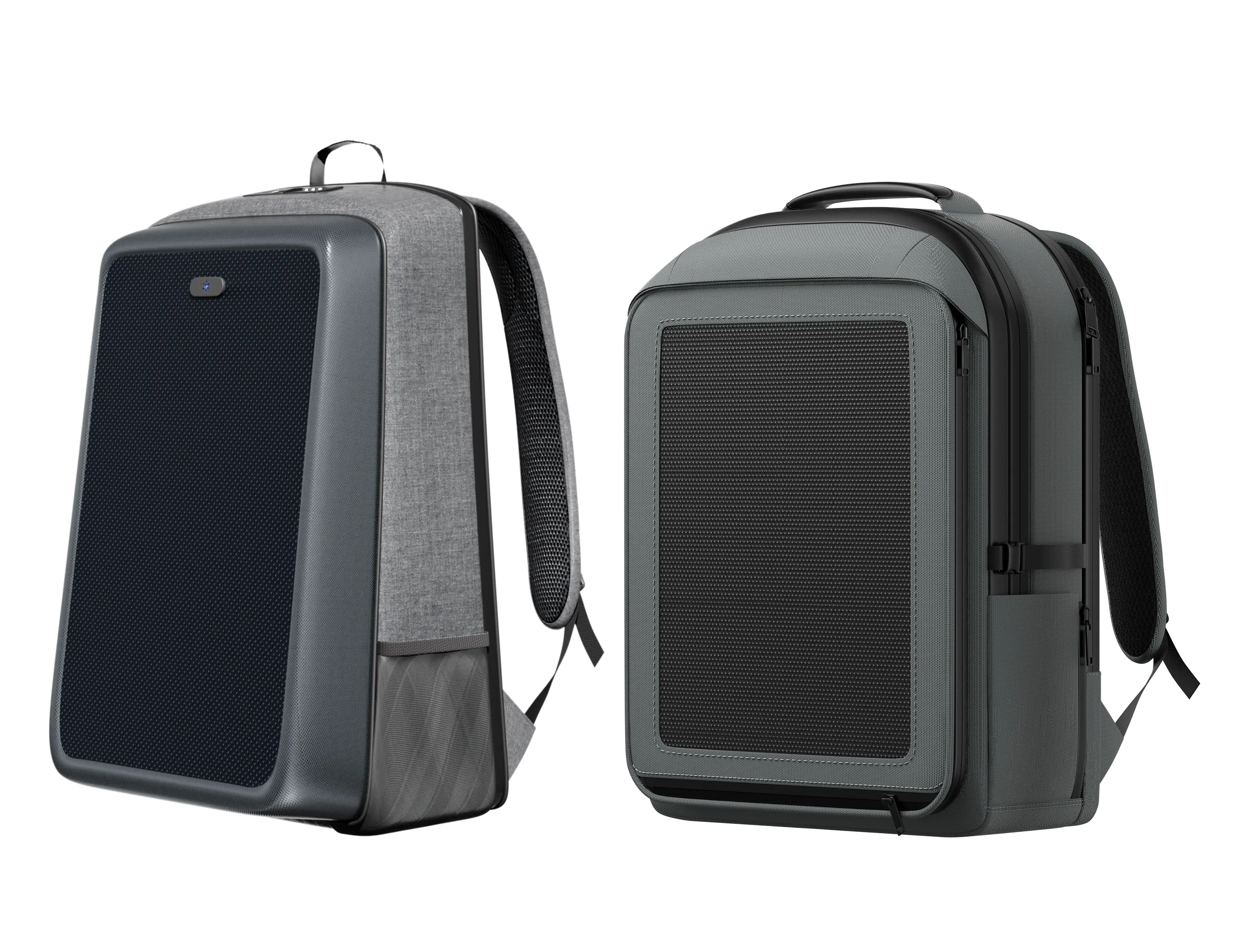
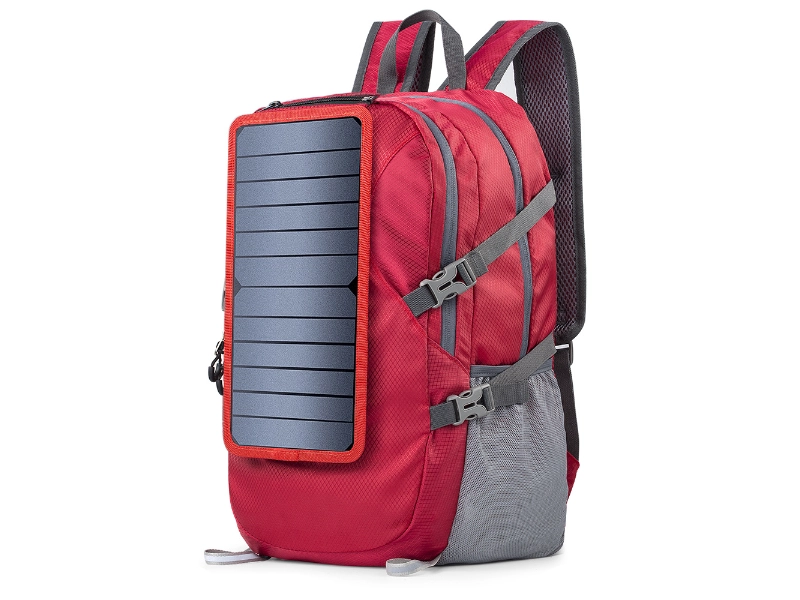
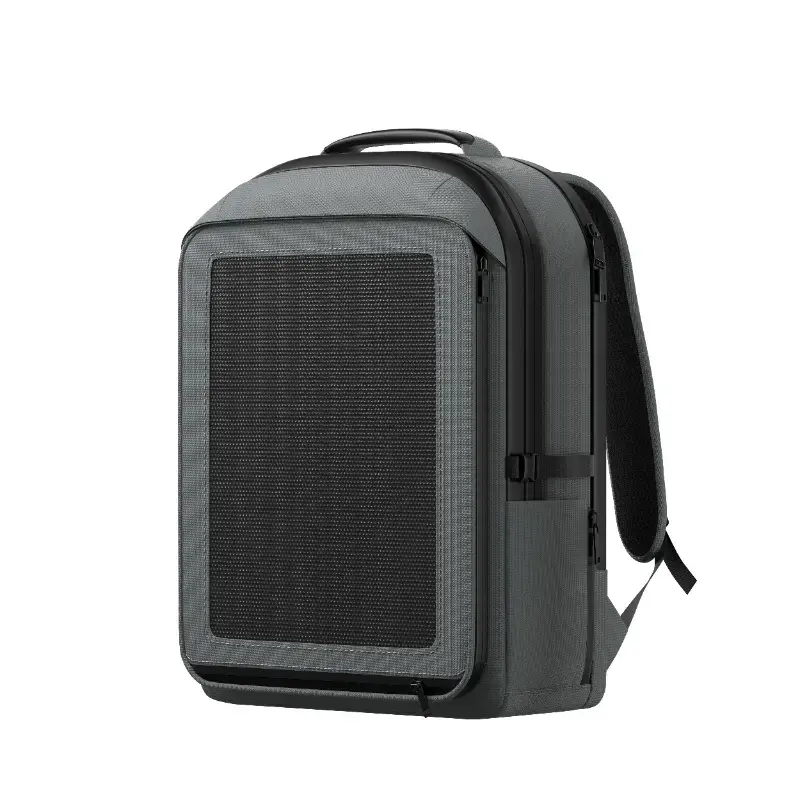
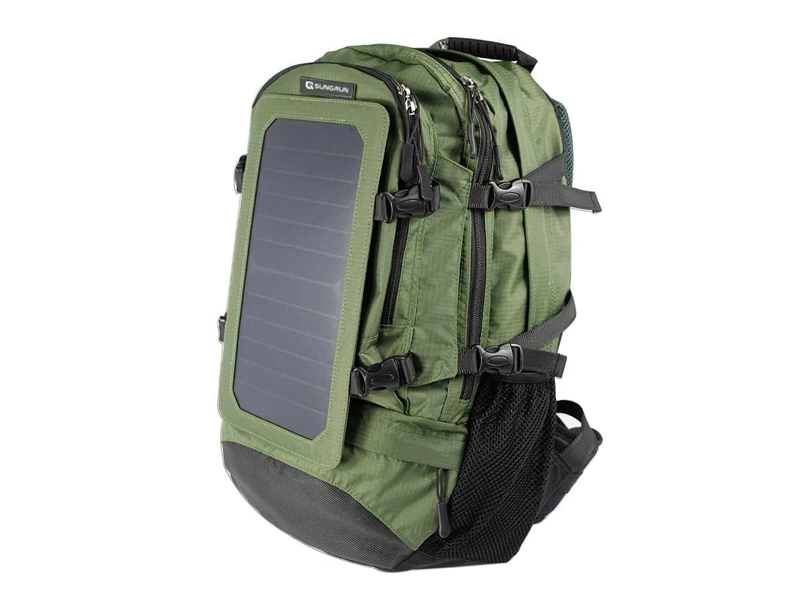
Sungrun’s 30W solar backpack is designed to provide supplementary outdoor charging for compatible small electronic devices. Understanding its configuration helps explain where a solar backpack fits into an outdoor charging setup.
Solar Backpack vs Power Bank: What Is the Difference?
The most important distinction is how each product obtains and supplies electricity.
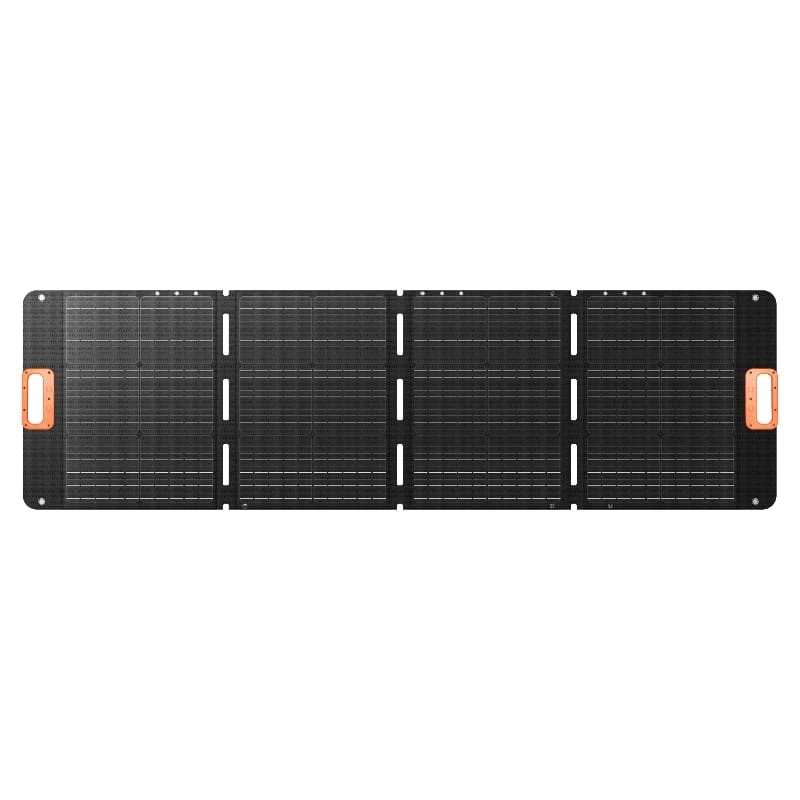
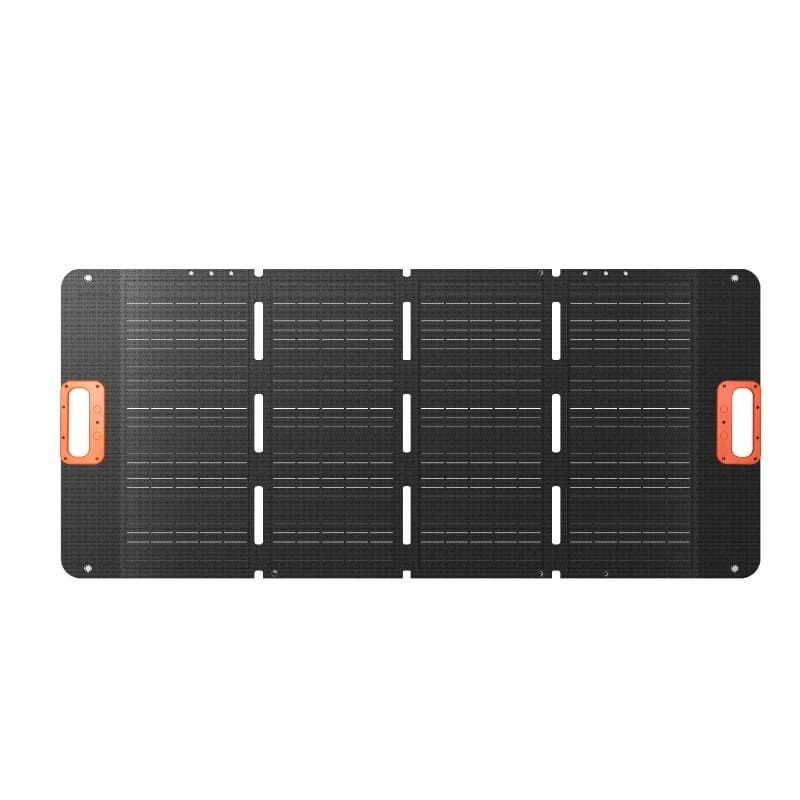
A solar backpack uses integrated photovoltaic panels to convert sunlight into electrical energy. Its available output changes with sunlight intensity, panel orientation, shading, and operating conditions.
A power bank stores electricity in a rechargeable battery and supplies that stored energy through its output ports. It does not need sunlight when charging a connected device, but its available energy is limited by the amount previously stored.
| Comparison factor | Solar backpack | Power bank |
| Main function | Generates electricity from sunlight | Stores and supplies previously charged electricity |
| Energy source | Solar energy | Electricity supplied during charging |
| Dependence on sunlight | Required for solar generation | Not required for device output |
| Energy storage | Depends on whether a battery is included | Built-in rechargeable battery |
| Output availability | Changes with solar conditions and product design | Depends on remaining battery capacity |
| Typical outdoor role | Supplementary outdoor charging | Portable stored-energy supply |
The distinction is straightforward: one product generates electricity, while the other stores it.
How Does a Solar Backpack Support Outdoor Charging?
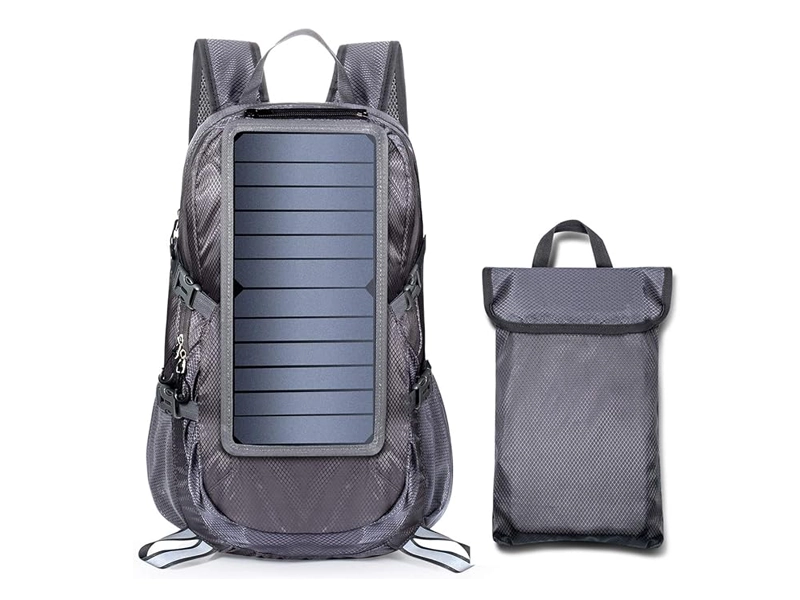
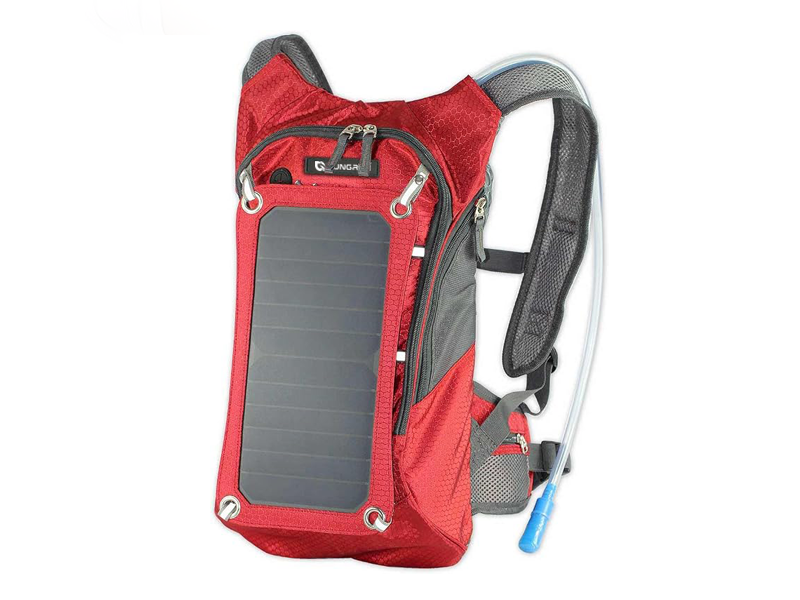
A solar backpack combines a carrying product with an integrated solar charging system. Its panels collect sunlight and provide electrical output through the product’s supported charging interface.
This can be useful during outdoor activities where users spend time in open areas and have opportunities to expose the panels to sunlight.
However, solar generation is not constant. Output can fall when the panels are shaded, face away from the sun, or receive weaker sunlight. A backpack should therefore not be treated as a guaranteed continuous power source.
For Australian outdoor users, this is particularly relevant when moving between open campsites and shaded bushwalking trails.
How Does a Power Bank Support Outdoor Charging?
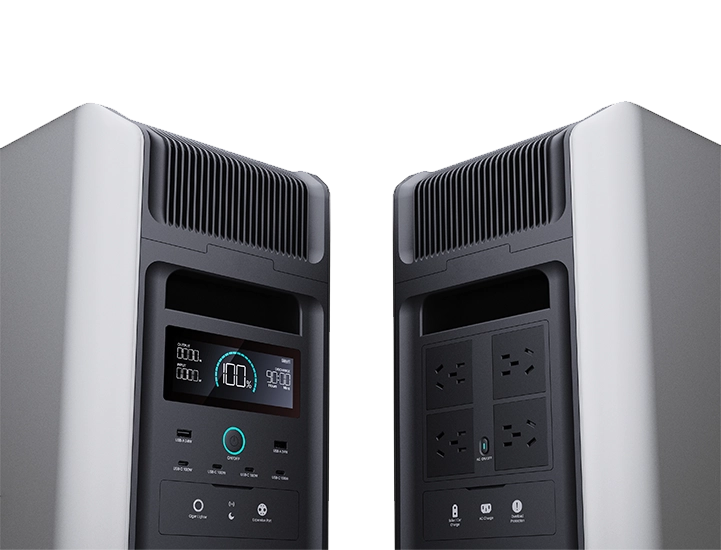
A conventional power bank provides electricity from its internal rechargeable battery. Users charge it before leaving home or while accessing a suitable power source, then connect their devices during the trip.
Its main advantage is that it can supply stored energy without depending on sunlight at the time of use.
For short day trips, this can be a convenient way to keep a phone or other compatible device charged. Its limitation is that the stored energy is finite. Once depleted, it needs to be recharged before supplying additional power.
Which Option Is More Suitable for Different Outdoor Activities?
Neither product is automatically the better choice for every outdoor situation. The intended activity and charging requirements should guide the decision.
Camping
At an open campsite with good sunlight exposure, a solar backpack can collect additional energy during the day. It may suit campers who want supplementary charging for compatible small devices while using the backpack to carry personal belongings.
A power bank can provide stored electricity when sunlight is unavailable. The two products therefore serve different functions during a camping trip.
Hiking and Bushwalking
For hiking and bushwalking, carrying comfort and weight are important considerations.
A solar backpack combines storage space with an integrated charging feature. However, its solar output may be limited on shaded trails or when the panels do not receive direct sunlight.
A power bank provides stored energy without requiring solar exposure, but it adds a separate item to the user’s equipment.
The more suitable arrangement depends on the route, expected device usage, and access to sunlight.
Day Trips and Outdoor Travel
For shorter trips, users may only need enough stored energy for their expected phone and accessory usage. In this situation, a conventional power bank may be sufficient.
A solar backpack may be more attractive to users who want an integrated carrying and supplementary charging solution, particularly when spending considerable time outdoors.
Can a Solar Backpack Charge a Power Bank?
Not every solar backpack is compatible with every power bank.
Compatibility depends on several electrical and technical factors, including:
Output voltage and current from the solar backpack.
Input voltage and current accepted by the external device.
Connector type and cable compatibility.
Charging protocols and power-management logic.
The ability of the receiving device to handle changes in solar input.
Solar output can fluctuate as sunlight changes. Some external devices may not accept inconsistent input or may stop charging when the available power falls below their operating requirements.
Compatibility should therefore be confirmed through product specifications and actual testing before users connect an external energy-storage device.
Sungrun’s current 30W solar backpack does not include a built-in battery, and Sungrun does not sell a bundled or matching power bank with this product. Buyers considering an external device should evaluate compatibility independently rather than assume that any power bank will work.
What Is the Sungrun 30W Solar Backpack Designed For?
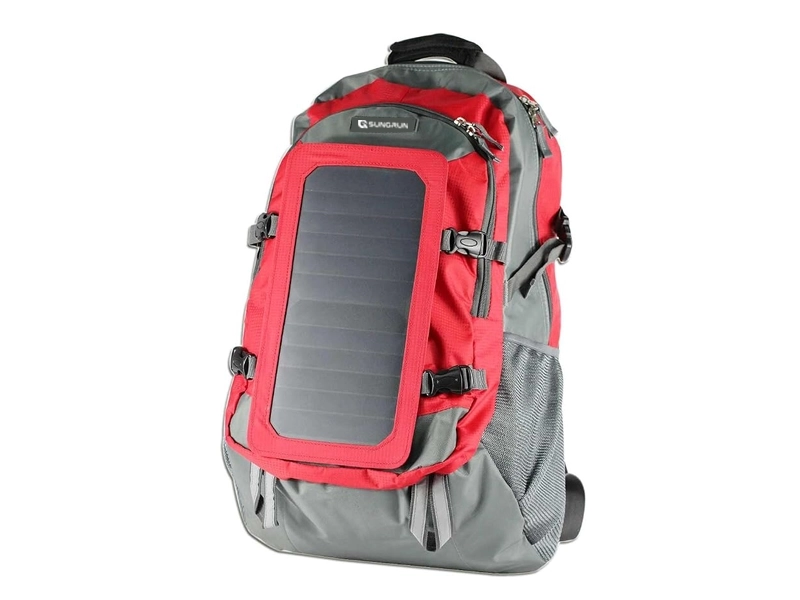
Sungrun’s current reference model combines a 30L backpack with two integrated 15W solar panels.
Its main specifications include:
| Feature | Product configuration |
| Rated solar power | 30W |
| Solar panel arrangement | Two integrated 15W panels |
| Panel installation | Non-removable |
| Backpack capacity | 30L |
| Built-in battery | Not included |
| Intended application | Supplementary charging for compatible smartphones and small electronic devices |
The integrated panel design allows the backpack to collect solar energy without requiring users to carry a separate portable solar panel.
Its 30L capacity also provides space for personal belongings and outdoor essentials. For camping, hiking, and day trips, this combination may be useful for people who want a backpack with an additional solar charging function.
The product’s 30W rating should not be interpreted as a guarantee of 30W output throughout the day. Actual performance depends on sunlight exposure, panel positioning, and the connected device’s charging requirements.
What Should You Consider Before Choosing?
Before deciding between a solar backpack and a power bank, consider the following questions:
How long will the trip last? Short day trips may require only a limited amount of stored energy, while longer outdoor activities may benefit from an additional solar charging option.
Will the panels receive sufficient sunlight? Open campsites may provide better solar exposure than shaded forest trails.
Which devices need charging? Check their input voltage, current, connector, and charging protocol.
Does the solar backpack include a battery? Sungrun’s 30W model does not. It generates electricity under suitable sunlight conditions but does not store it internally.
How important is carrying convenience? An integrated solar backpack combines storage and solar functionality, while a power bank is a separate portable energy-storage product.
These considerations help users select a practical setup without expecting one product to perform functions it was not designed to provide.
Frequently Asked Questions
Is a solar backpack better than a power bank for hiking?
It depends on the route and charging requirements. A solar backpack can provide supplementary outdoor charging when sufficient sunlight is available, while a power bank supplies previously stored energy regardless of sunlight.
Does Sungrun’s 30W solar backpack include a power bank?
No. The product does not include a built-in battery, and Sungrun does not sell a bundled or matching power bank with this model.
Can any power bank be connected to a solar backpack?
No. Compatibility depends on the output and input electrical specifications, connector, charging protocol, and power-management design. The combination should be checked through documentation and testing.
Is a solar backpack useful on shaded trails?
It can still serve as a backpack, but solar generation may be reduced when the panels receive limited sunlight. Users should not expect consistent rated output under heavy shade.
Explore Sungrun’s 30W Solar Backpack
A solar backpack and a power bank serve different roles in an outdoor charging setup. One generates electricity from sunlight, while the other stores electricity for later use.
Sungrun’s 30W solar backpack combines a 30L carrying capacity with two integrated 15W solar panels. It is designed for supplementary charging of compatible small electronic devices and does not include an internal battery.
Explore the Sungrun 30W solar backpack specifications to learn more about its configuration and intended outdoor applications.