

OEM Solar Backpacks: A Sourcing Guide for Australian Distributors
Release time: 2026-11-02
Table of Contents
For Australian outdoor retailers, promotional product businesses, and equipment distributors, solar backpacks offer a practical way to combine everyday carrying functions with portable solar charging. However, sourcing a suitable product for the local market involves more than selecting a backpack with a solar panel. Buyers also need to consider electrical specifications, product construction, branding requirements, supply-chain coordination, and the expectations of their target customers.
Sungrun supports solar application product development and supply-chain services, helping business customers evaluate product configurations and coordinate sourcing requirements. For distributors considering an OEM solar backpack, understanding the product specification and customisation scope before requesting a quotation can make the sourcing process more efficient.
What Should Australian Distributors Look for in an OEM Solar Backpack?
A solar backpack has two essential functions: carrying personal equipment and providing access to solar-generated electricity. Both need to be evaluated when selecting a product for retail or distribution.
Solar Panel Configuration and Rated Power
The solar panel’s rated power is an important starting point, but it should not be treated as a guarantee of continuous outdoor output. Actual generation depends on sunlight intensity, panel orientation, shading, temperature, and the electrical configuration.
Buyers should request the rated power, operating voltage, current, output interfaces, and relevant product documentation. They should also clarify whether the solar panel is fixed, removable, or integrated into the backpack structure.
For products intended for Australian outdoor users, the distinction matters. A backpack used for camping or bushwalking may experience changing sunlight and partial shading throughout the day. Product descriptions should therefore communicate realistic charging expectations.
Backpack Capacity and Material Construction
The backpack itself must meet the practical needs of the intended customer. Capacity, dimensions, weight, fabric, lining, compartments, zippers, and shoulder strap construction all influence the user experience.
A lightweight daypack may suit commuters and casual outdoor users, while a larger backpack may be more appropriate for travel or extended outdoor activities.
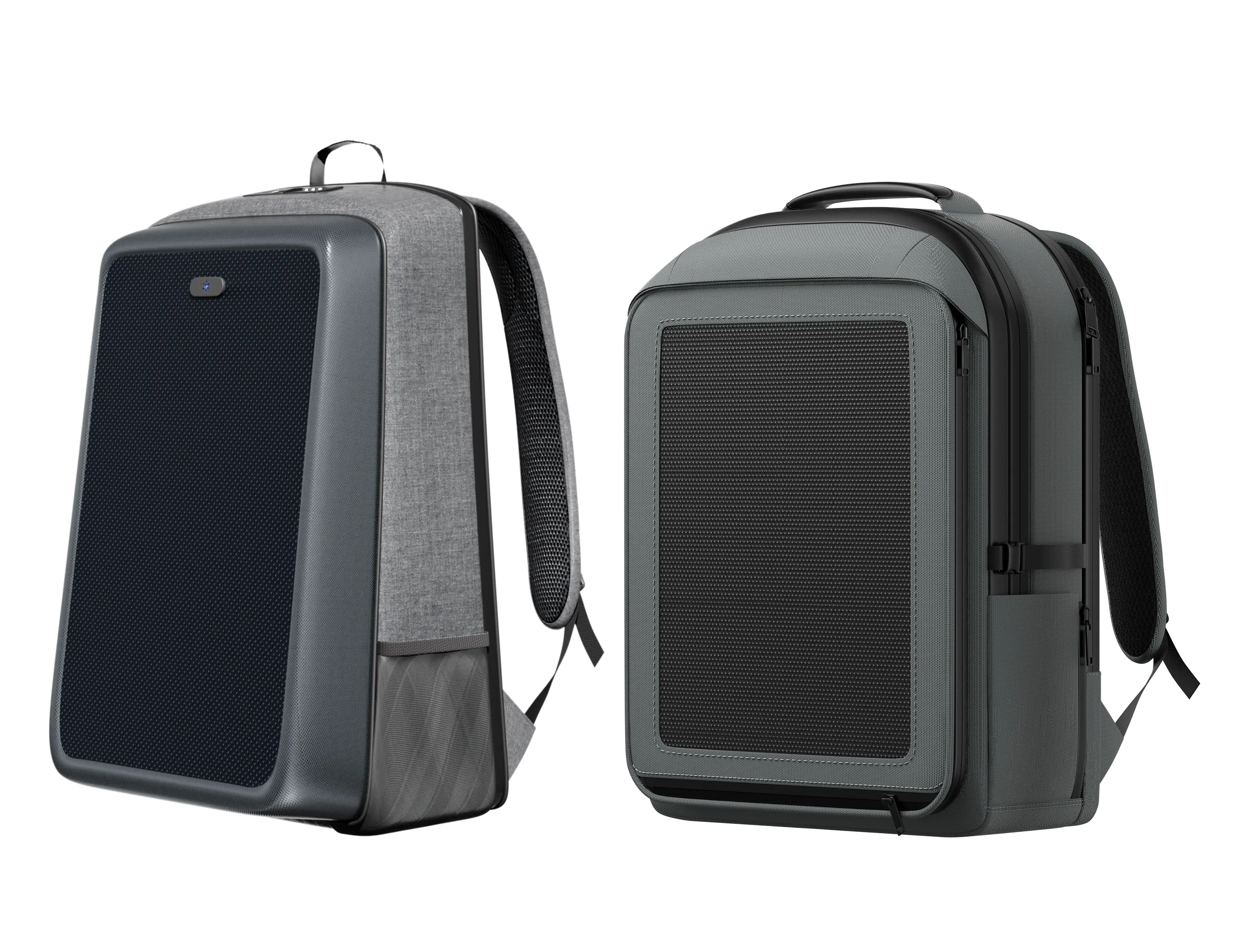
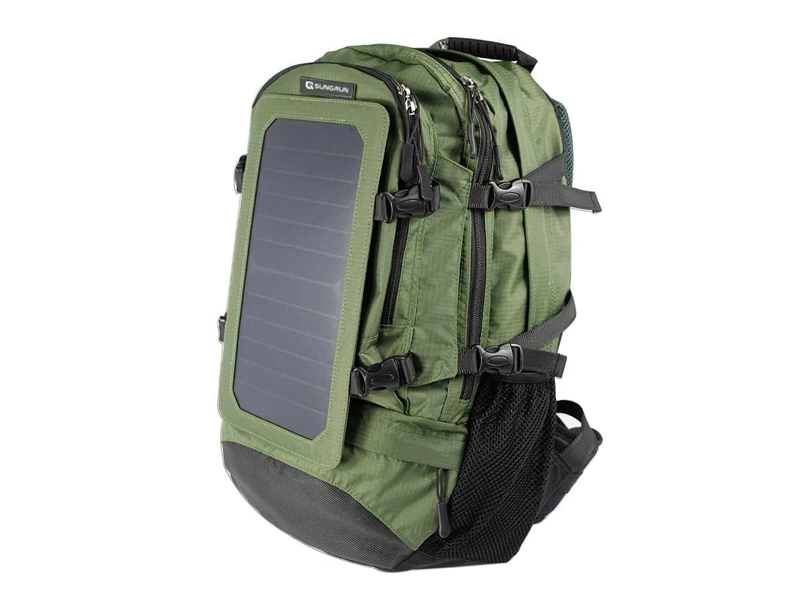
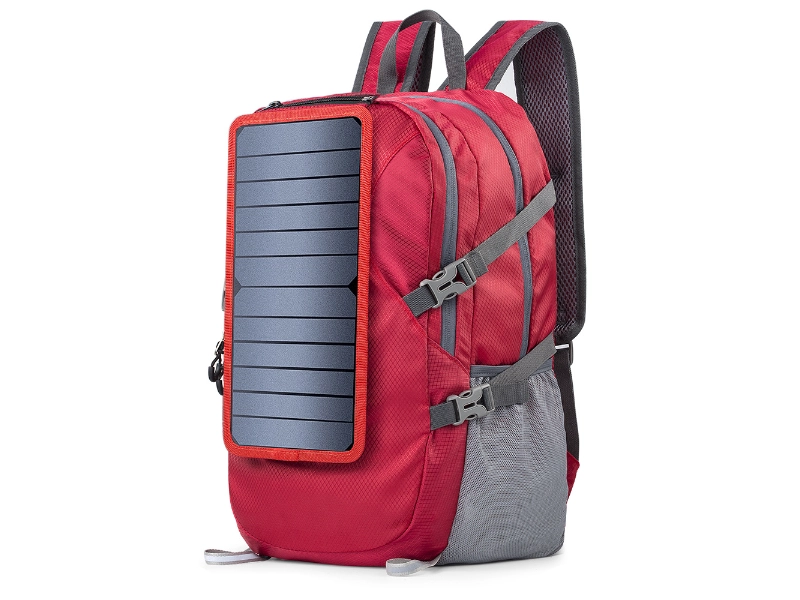
Buyers should review product samples or detailed product images to assess the carrying structure, stitching, panel attachment, cable routing, and storage layout before confirming a bulk order.
Charging Interface and Battery Configuration
Not every solar backpack includes an internal battery. Some models provide a solar panel and charging output without storing electricity inside the backpack.
This distinction should be clear in the product specification and retail description. Buyers should confirm the available USB or other output interfaces, voltage and current ratings, charging compatibility, and whether an external energy-storage device is required.
A solar backpack without an internal battery should not be marketed as a product that stores solar energy for use after sunset.
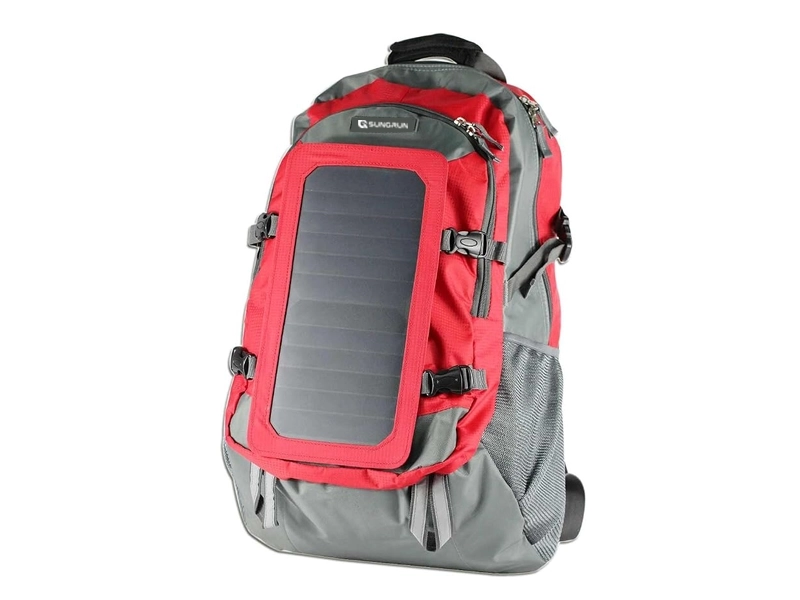
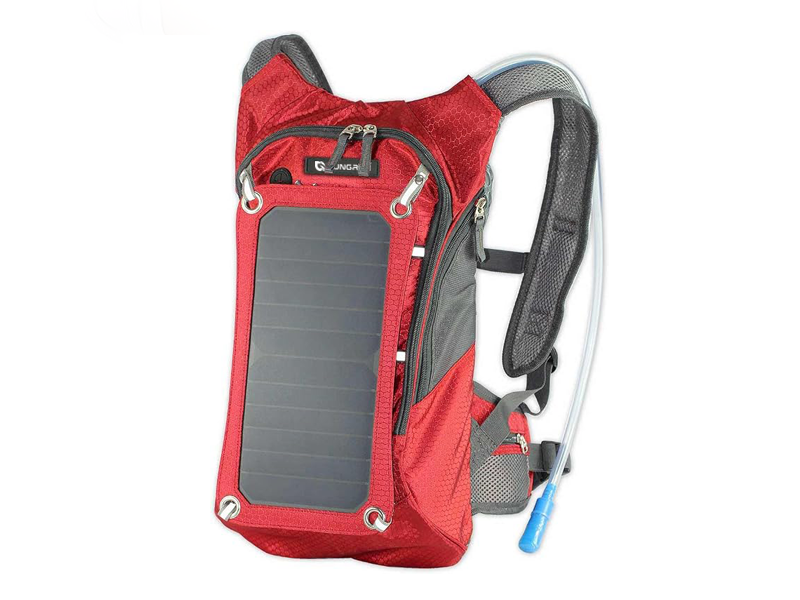
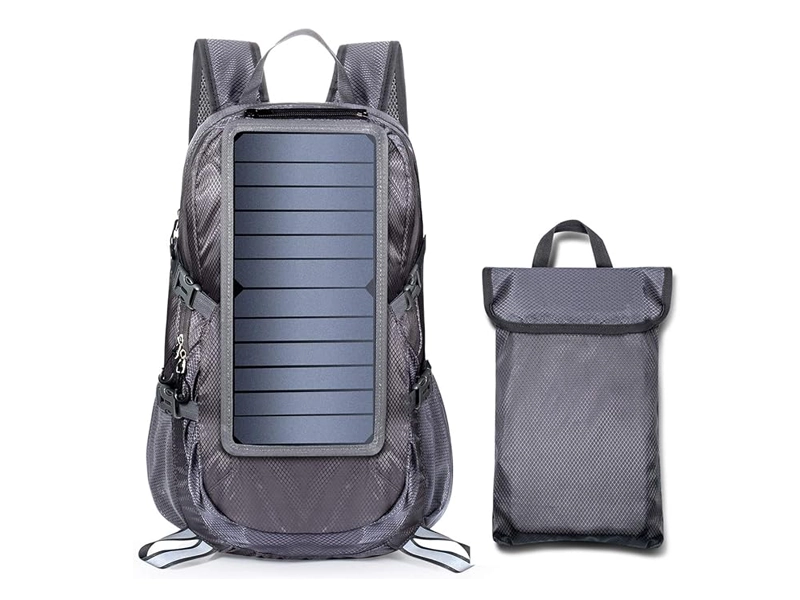
Sungrun Reference Product: 30W Solar Backpack
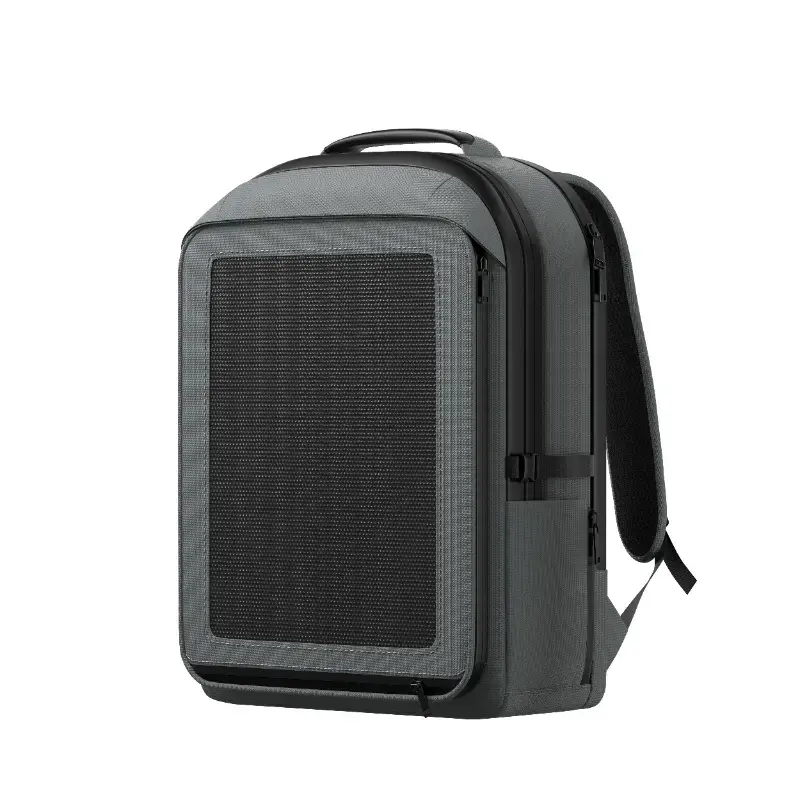
Sungrun’s current 30W solar backpack provides a reference configuration for distributors evaluating this product category.
| Product feature | Confirmed configuration |
| Rated solar power | 30W (±5W), dual-panel version |
| Solar panel arrangement | Two integrated 15W solar panels |
| Panel installation | Integrated with the backpack and non-removable |
| Backpack capacity | 30L |
| Dimensions / weight | 330 × 220 × 445 mm / 1.5 kg |
| Fabric | Woven Oxford Cloth + Nylon |
| Output ports | USB-A (22.5W interface rating) and Type-C (15W interface rating) |
| Built-in energy-storage battery | Not included |
| Intended charging use | Compatible smartphones and other small electronic devices |
This configuration combines a 30L carrying space with a 30W-rated solar charging system. The two 15W panels are integrated into the backpack rather than designed as detachable accessories.
The product is intended to provide supplementary charging for compatible small electronic devices. Its actual output depends on available sunlight and operating conditions. It is not intended for laptop charging. The laptop compartment is a storage layer only.
The USB-A and Type-C figures are interface ratings. They do not mean both ports can deliver their maximum output at the same time under sunlight. Product-specific output details and interface compatibility should be reviewed before making claims about charging performance.
What Can Be Customised in a Private-Label Solar Backpack Project?
A private label solar backpack project may involve branding and product presentation requirements as well as selected product adjustments.
Depending on the confirmed product configuration and sourcing arrangements, potential discussion areas include:
- Logo and branding: Logo placement and branding presentation for the distributor’s own product range.
- Colour selection: Colour requirements for the backpack and selected components, subject to material and sourcing availability.
- Packaging: Retail packaging, branded presentation, and product information materials.
- Material options: Fabric and lining preferences, subject to confirmation with the relevant production partner.
- Structural adjustments: Changes to compartments, dimensions, or construction that require technical and supply-chain review.
Not every request can be applied to every existing model. Changes involving solar panel power, electrical interfaces, panel integration, or the backpack’s structural design require a separate feasibility assessment before they can be confirmed.
This is particularly important for a custom solar charging backpack. Electrical changes may affect the product’s overall configuration and require additional technical review. Buyers should provide their requirements early rather than assume that all requested changes are automatically available.
MOQ, Samples, and Production Lead Time
MOQ, sample arrangements, and production schedules depend on the selected product, materials, branding requirements, and degree of customisation.
- MOQ: Project-specific MOQ and lead time are confirmed after the product configuration and customisation requirements are reviewed.
- Samples: Sample availability, sample charges, and the sample development process need to be confirmed according to the selected configuration.
- Bulk production: Production timing depends on material availability, customisation requirements, sample approval, and the schedule of the confirmed production partner.
- Documentation: Applicable product documents and compliance information should be reviewed according to the final configuration and target market.
Distributors should request a written quotation and project schedule before making commitments to their own customers.
What Should Australian Buyers Include in an OEM Enquiry?
A detailed enquiry helps the product and supply-chain team understand the project more efficiently. Instead of requesting a general price for a solar backpack, buyers should provide the following information:
| Information required | Details to provide |
| Target market | Australia, or other intended sales regions |
| Estimated order quantity | Expected initial order and potential repeat volume |
| Branding requirements | Logo format, placement, and branding preferences |
| Packaging requirements | Retail packaging, labels, manuals, and other presentation needs |
| Product customisation | Preferred colour, materials, compartments, or other changes |
| Delivery requirements | Required delivery date and destination |
This information helps determine whether an existing product configuration is suitable or whether further product development and sourcing coordination are needed.
Why Work with Sungrun on Solar Backpack Sourcing?
Selecting a suitable product is only one part of an OEM project. Buyers also need clear communication between product requirements, technical specifications, sourcing arrangements, and delivery expectations.
Sungrun focuses on photovoltaic application products and supply-chain services. Its role is to help customers assess product options, clarify configuration requirements, and coordinate sourcing arrangements with the relevant production partners.
For Australian distributors, this approach provides a structured starting point for evaluating a wholesale solar backpack project.
Frequently Asked Questions
What is an OEM solar backpack?
An OEM solar backpack is a backpack with an integrated solar charging system that is supplied according to a buyer’s agreed product and branding requirements. The exact customisation scope depends on the product configuration and sourcing arrangements.
Does Sungrun’s 30W solar backpack include a battery?
No. The current 30W reference model does not include a built-in energy-storage battery. It is designed to provide supplementary charging for compatible small electronic devices.
Can the 30W solar backpack be used for laptop charging?
No. This 30W model is designed for compatible small devices and is not intended for laptop charging.
What is the MOQ for a private-label solar backpack?
Project-specific MOQ and lead time are confirmed after the product configuration and customisation requirements are reviewed. Buyers should provide their expected order quantity and branding requirements for assessment.
Can distributors customise the solar panel power or electrical interface?
These changes require technical and supply-chain review. Availability should be confirmed for the specific product configuration before being included in a quotation or product specification.
Discuss Your OEM Solar Backpack Project with Sungrun
Planning to introduce a branded solar backpack to the Australian market? Sungrun can help you review the product configuration and coordinate sourcing requirements for your project.
When making an enquiry, please include your target market, estimated order quantity, logo and packaging requirements, desired product customisation, and required delivery date.
Request a Wholesale Quote — contact Sungrun to discuss your OEM solar backpack sourcing requirements and request product information.