

How Can Solar-Plus-Storage Improve Commercial Energy Resilience?
Release time: 2026-09-11
Table of Contents
For commercial and industrial facilities, energy resilience is closely linked to operational continuity. Even a short power interruption can stop production equipment, interrupt refrigeration, affect data systems, or require critical processes to be restarted. At the same time, high electricity demand during peak periods can raise operating costs even when the grid itself remains stable.
Solar generation can reduce a facility’s daytime dependence on the grid, but PV generation does not always match the timing of electricity demand. Battery storage provides a way to bridge that gap. Energy can be stored when solar output is available and used when the facility needs it, allowing a well-designed solar-plus-storage system to support backup power, peak shaving, and greater use of on-site renewable generation.
Grunsolar Technology Co., Ltd. focuses on green energy technologies covering photovoltaic systems and energy storage. With more than 15 years of accumulated experience across its integrated entities and over 120 national patents, the company develops energy storage products for different commercial and industrial requirements.
Commercial Energy Storage Products for Different Site Requirements
A commercial energy storage system needs to match the facility’s load profile, available solar capacity, backup requirements, and installation conditions. The C&I storage range includes fixed-power liquid-cooled systems as well as modular high-voltage battery configurations.
| Product Series | Power / Capacity | Key Configuration | Typical Application |
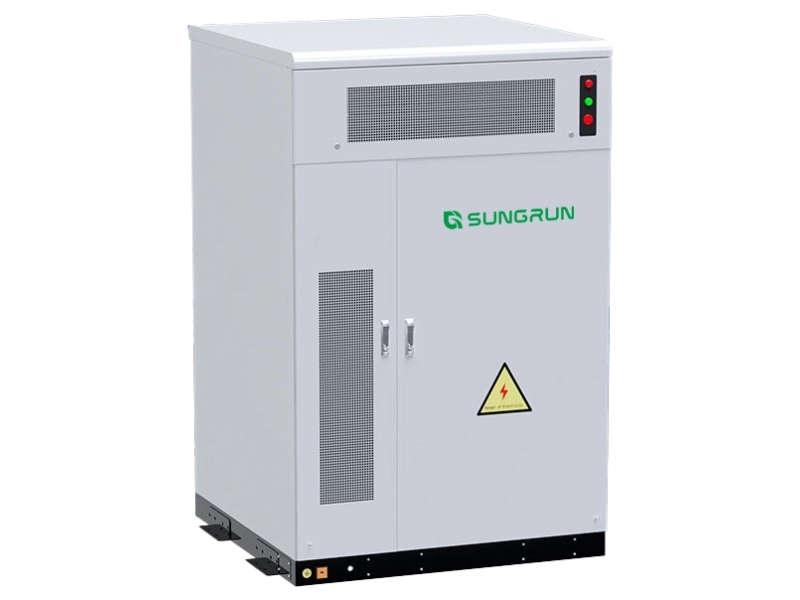
| 125K Series | 125 kW; 209.0 / 261.25 / 418.0 kWh | LiFePO4, liquid cooling, IP55, three-phase | Factory peak shaving, commercial backup, emergency power |
| GR125H2-PV-STS | 125 kW / 261.24 kWh | LiFePO4, dual MPPT, liquid cooling, STS switching | Peak shaving, backup power, solar integration |
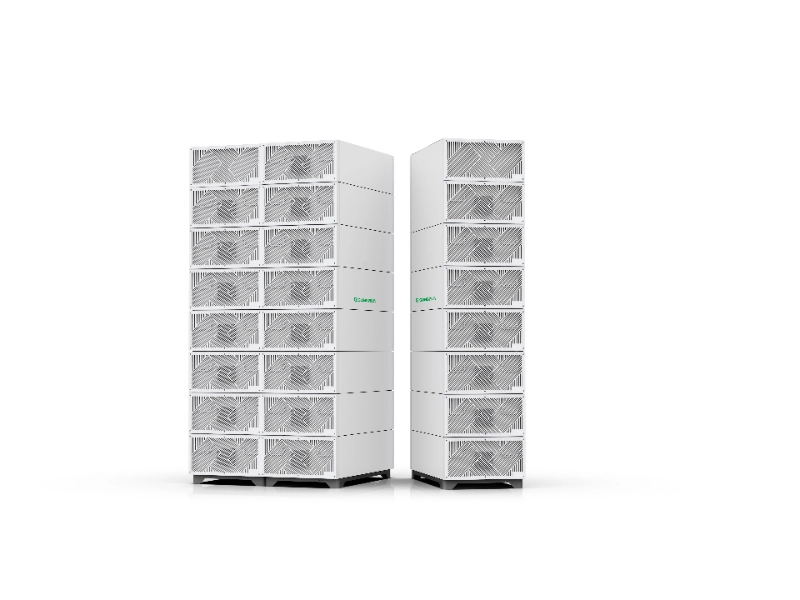
| GRXH Series | 20.48–71.68 kWh per configuration, expandable to 280 kWh | Modular LFP racks, 1000 Vdc, AI-powered BMS, IP55 | C&I peak shaving, backup power, renewable integration |
The 125K Series offers three energy configurations while maintaining a 125 kW nominal output. It uses LiFePO4 battery chemistry, with a battery operating voltage range of 160–1000 V and IP55 enclosure protection. The system supports three-phase operation and carries certifications including UN38.3, IEC 62619, CE, CEI 021, VDE-AR-N 4105, and IEC 62109.
For facilities that need direct solar integration, the GR125H2-PV-STS combines 125 kW output with 261.24 kWh of LFP storage, dual MPPT trackers, and on/off-grid STS switching. Liquid cooling, aerosol fire suppression, and an 8,000-cycle specification make it suitable for demanding C&I applications.
The GRXH Series uses a modular approach. Six configurations are available, ranging from 20.48 kWh to 71.68 kWh, while parallel rack connections allow total capacity to reach 280 kWh. Up to seven PACKs can be connected in series, and up to four racks can be connected in parallel. This gives facilities more flexibility when their storage requirements increase over time.
How Does Solar-Plus-Storage Improve Energy Resilience?
1. It Provides a Controlled Backup Power Source
For facilities with loads that cannot tolerate an outage, relying entirely on the grid creates a clear operational risk. These loads may include refrigeration, security systems, communications equipment, production controls, medical equipment, or other critical electrical systems.
Battery storage can provide an alternative source of power when the grid goes down. Backup performance, however, depends on more than battery capacity. The critical-load panel, inverter rating, transfer equipment, and required backup duration all need to be considered as part of the same system.
A commercial battery energy storage system should therefore be configured around the facility’s actual load priorities. During an outage, not every circuit needs to remain energized. Separating critical and non-critical loads can reduce the battery capacity required while keeping essential equipment in operation.
The GR125H2-PV-STS, for example, uses on/off-grid STS switching, with a charge/discharge conversion time of less than 100 ms on its PCS side. This architecture can be useful where the transition between grid power and stored energy needs to be closely controlled.
2. It Reduces Exposure to Peak Demand
Electricity demand at commercial and industrial sites can vary considerably throughout the day. Production equipment, HVAC systems, pumps, compressors, and other high-power loads may create short periods of particularly high demand.
Peak shaving uses stored energy to reduce the amount of electricity drawn from the grid during these periods. When facility demand rises, the battery can supply part of the required power instead of leaving the entire increase to the grid connection.
The result depends on how well the battery’s power rating matches the facility’s load profile. A large battery does not necessarily provide enough power for a short demand peak. If inverter output is too low, the system may still struggle to cover a high-power load even when substantial energy remains stored. On the other hand, excessive battery capacity can increase project cost without delivering a comparable operational benefit.
This makes the 125 kW output of the 125K Series an important consideration for commercial applications. The three available energy configurations—209.0 kWh, 261.25 kWh, and 418.0 kWh—also allow storage duration to be matched more closely to different operating patterns.
3. It Makes Better Use of Solar Generation
Solar generation and electricity demand do not always occur at the same time. A commercial building may produce substantial solar power around midday, while its highest electricity demand occurs later in the afternoon or evening.
Without storage, the value of surplus PV generation depends largely on the site’s own consumption and the conditions for exporting electricity to the grid. A battery can store that excess energy and make it available later.
A solar-plus-storage system for commercial use creates a more flexible relationship between generation and consumption:
Solar generation → on-site loads → battery charging → stored energy → later load support.
The battery does not necessarily need to charge at maximum capacity whenever solar power is available. The operating strategy should take solar output, load demand, electricity tariffs, battery state of charge, and backup requirements into account. For some facilities, keeping enough energy in reserve for an outage may be more important than maximizing daily battery utilization.
What Role Does Energy Management Play?
Battery hardware alone does not determine how a storage system operates. The energy management system controls when the battery charges and discharges and how much capacity is kept available for backup.
The GRXH Series uses a Master-Slave BMS with AI-based algorithms for cell balancing, real-time optimization, and OTA upgrades. Its cloud-platform EMS supports communication with multiple inverters and remote monitoring.
In a C&I installation, these functions can help coordinate storage with the existing electrical system. For example, the battery can participate in peak shaving during normal operation while keeping part of its capacity available for backup. The actual control strategy should be based on the facility’s load characteristics and project requirements rather than a fixed operating schedule.
Why Does Liquid Cooling Matter in Larger C&I Storage Systems?
As battery capacity and operating power increase, thermal management becomes an important part of system design. Commercial storage cabinets may operate through repeated or sustained charging and discharging cycles, so controlling operating temperature is relevant to both system performance and battery management.
The 125K Series uses liquid cooling and offers three energy configurations at a fixed 125 kW output. Its IP55 enclosure is designed for commercial and industrial installation conditions. The GR125H2-PV-STS also uses liquid cooling and includes an aerosol fire suppression system.
Site planning still needs to cover ventilation, installation clearance, ambient temperature, fire safety, electrical protection, and maintenance access. These factors should be addressed alongside the storage system itself during project design.
How Should a Commercial Solar-Plus-Storage System Be Sized?
System sizing should start with the facility’s actual electricity data rather than the battery catalogue.
Several factors need to be considered:
- Load profile: Identify normal, peak, and critical loads throughout the operating day.
- Backup requirement: Determine which loads must remain powered during an outage and for how long.
- Solar capacity: Compare PV generation with daytime consumption and identify periods of surplus generation.
- Battery power: Check whether the inverter can provide sufficient instantaneous power for the target loads.
- Battery capacity: Match usable energy to the expected duration of peak shaving or backup operation.
- Operating strategy: Define the priority between self-consumption, peak shaving, tariff management, and emergency reserve.
- Installation conditions: Consider temperature, humidity, corrosion exposure, available floor space, and electrical connection requirements.
For sites where electricity demand is expected to grow, modular storage can provide a practical advantage. The GRXH Series supports expansion through parallel rack connections, allowing total capacity to reach 280 kWh. This gives a facility room to increase storage capacity as its energy requirements change without necessarily replacing the complete system.
Where Can Commercial Energy Storage Deliver the Most Value?
Different commercial facilities have different energy requirements and resilience priorities.
Manufacturing plants can use storage to reduce demand peaks while maintaining backup capacity for control systems and selected production loads. Shopping malls can use batteries during periods of high demand and provide backup for important building systems. Hospitals generally place greater emphasis on the continuity of critical loads, making backup architecture and transfer performance particularly important.
Commercial sites with significant rooftop PV can also use storage to shift surplus daytime generation to later periods. EV charging facilities are another potential application because several high-power chargers operating at the same time can create short periods of elevated demand.
The system should be evaluated against the site’s actual operating profile rather than battery capacity alone. A 125 kW system, for example, may suit one facility but be undersized or oversized for another depending on peak load, required backup power, and operating hours.
Why Consider Grunsolar for C&I Energy Storage?
Grunsolar Technology Co., Ltd. was formed through the integration of Grun Holding Group and related entities, bringing together more than 15 years of experience in green energy buildings, photovoltaic system technology, and energy storage. Its energy storage portfolio includes integrated liquid-cooled cabinets and modular high-voltage systems for commercial and industrial applications.
The company is headquartered in Hefei, China, and has project experience in more than 30 countries. Local support teams in Europe, North America, and Southeast Asia work alongside localized production and global supply chains to serve different markets.
For a C&I energy project, product configuration, system scalability, and local support are all worth considering alongside the technical requirements of the site.
Conclusion
Solar-plus-storage improves commercial energy resilience by giving facilities greater control over when electricity is generated, stored, and consumed. Solar generation can reduce daytime grid demand, while batteries can shift energy to periods of higher demand and provide reserve power for critical loads when the grid is unavailable.
The right commercial energy storage system is not simply the one with the largest battery capacity. Power rating, usable energy, transfer characteristics, thermal management, control strategy, installation conditions, and future expansion all affect how well the system performs in practice.
For facilities that need both renewable integration and operational continuity, a properly sized commercial battery energy storage system can provide a more flexible energy architecture. When solar generation, battery storage, and energy management are designed as one system, a solar-plus-storage system for commercial use can support everyday energy management while giving the facility more options during grid interruptions.
Grunsolar continues to develop photovoltaic and energy storage technologies as part of its green energy portfolio, with the aim of supporting customers in different markets through reliable products and localized service capabilities.
FAQ
1. What is the main purpose of commercial energy storage?
Common applications include peak shaving, solar energy utilization, backup power, and reducing reliance on grid electricity during selected operating periods.
2. How does battery storage improve commercial energy resilience?
A storage system can provide stored electrical energy when grid power is unavailable or when facility demand is high. The actual backup capability depends on battery capacity, inverter power, load selection, and the overall system configuration.
3. Can commercial batteries work with solar PV?
Yes. When properly configured, battery storage can absorb surplus solar generation and discharge the stored energy later. Systems with MPPT functionality can also support direct PV integration where the system architecture allows it.
4. Is a larger battery always better for a commercial facility?
No. Battery capacity should correspond to the facility’s load profile, backup duration, peak demand, solar generation, and operating strategy. Oversizing can add unnecessary cost, while undersizing may limit the system’s practical value.
5. Can C&I energy storage be expanded later?
Some systems are designed for expansion. The GRXH Series, for example, supports parallel rack connections and can expand total capacity to 280 kWh, subject to the applicable system configuration.